RPGJS Studio: A Stable Workspace, Lifetime License, and AI Agent Workflow
RPGJS Studio now has a more stable cloud workspace, a lifetime license, improved asset generation, RPGJS-compatible exports, and a new workflow for coding agents.
RPGJS Studio: A Stable Workspace, Lifetime License, and AI Agent Workflow
Over the past few months, RPGJS Studio has changed a lot.
The goal is no longer only to provide an editor where you can generate a few assets or build a quick prototype. The goal is to make RPGJS Studio a real cloud workspace for creating RPGs: a place where maps, events, game data, assets, exports, and AI-assisted workflows can work together.
This update is important because the Studio now has a more stable foundation.
That does not mean the product is perfect. No software is. Bugs can still happen, and some features will keep improving. But the core structure is now clear enough to build on: the workspace, database, map system, event flow, world map, media tools, and export workflow are becoming the long-term base of RPGJS Studio.
A Workspace That Can Be Built On
RPGJS Studio now has a stronger structure around the main parts of an RPG project:
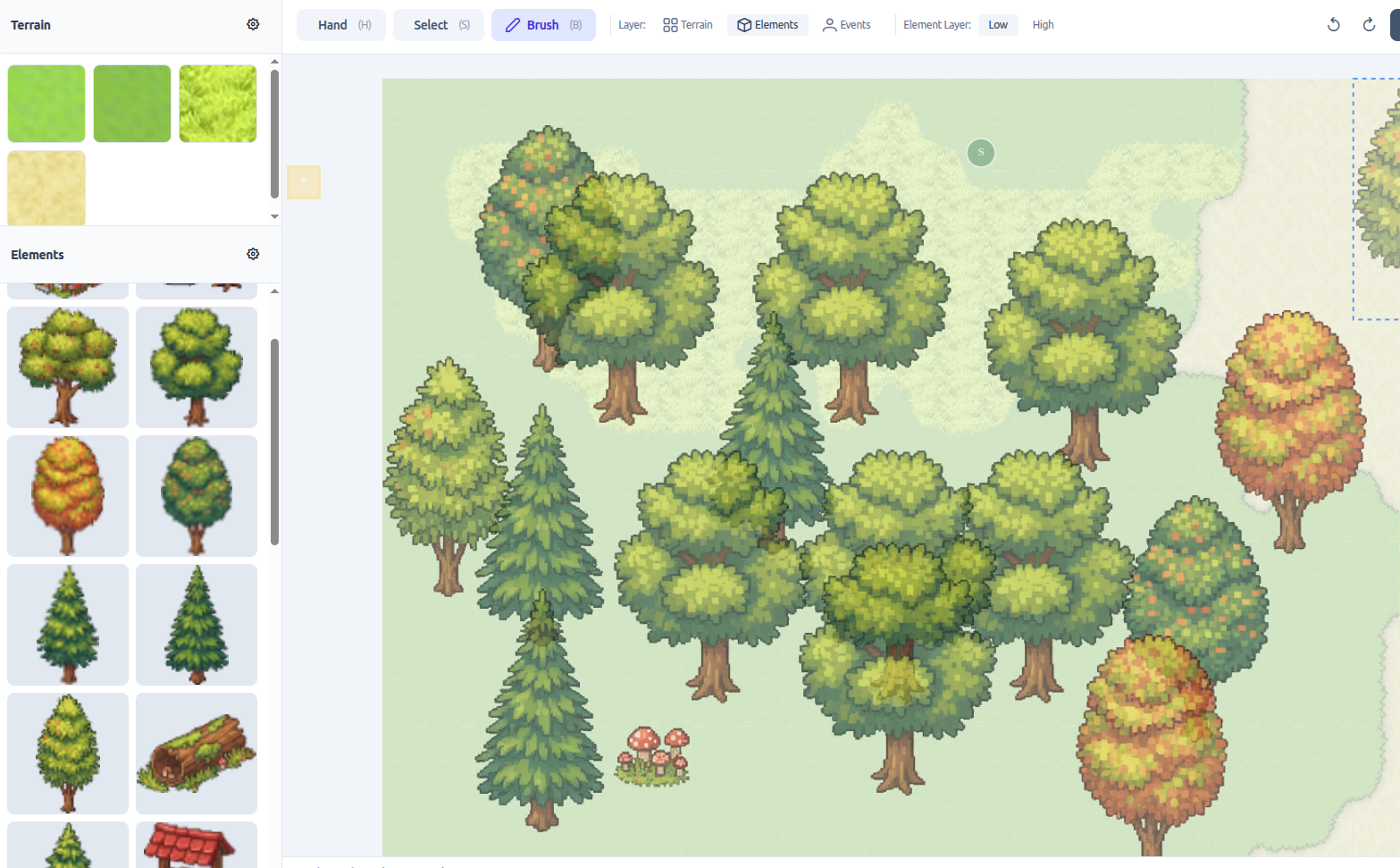
- Maps: create and edit playable areas.
- World map: organize how the player moves through the game world.
- Database: manage game data such as items, enemies, variables, and settings.
- Events: place interactions, dialogs, triggers, quests, and gameplay logic on maps.
- Media and assets: generate, import, organize, and reuse visual and audio content.
- Exports: move your game outside Studio when you need to continue with code.
This is the main change: Studio is becoming less of a temporary experiment and more of a production workspace.
It is still evolving, but the direction is now stable. The workspace is meant to stay compatible over time instead of changing shape every few weeks.
Better Asset Generation
Asset generation has also improved.
The generation pipeline now benefits from newer OpenAI models, which helps the Studio produce better results for RPG content such as sprites, icons, facesets, tilesets, music, and other media.
This matters because asset generation is not useful if it stays isolated. In RPGJS Studio, generated assets are part of the project workflow. You can create them, store them, reuse them, place them on maps, connect them to events, and later export the project.
The objective is not just to generate content. The objective is to make that content usable in a real RPG project.
Why the Pricing Model Changed
The previous subscription model created friction.
After seeing how people used the Studio, it became clear that many creators preferred a simple license instead of a monthly plan. A lot of RPGJS users are developers, students, or technical creators. They often want to test an idea, build a project at their own pace, and keep control over their game.
For that reason, RPGJS Studio now moves toward a lifetime license model.
The lifetime license gives you:
- the complete Studio workflow in the cloud;
- 500 AI credits included at purchase;
- 10 GB of project storage;
- access to future Studio improvements;
- bug fixes and continuous updates;
- a workflow that can be used with the open-source RPGJS engine.
Optional monthly add-ons will still exist for people who need more AI credits or more storage, but the main access is no longer built around a subscription.
You pay once, unlock the Studio workflow, and keep building.
Studio and the Open-Source Engine Now Work Together
RPGJS Studio is not here to replace the RPGJS engine.
The engine remains free and open source. You can still build an RPG directly with code. You can still use RPGJS without Studio. That part does not change.
The Studio is now positioned as a companion to the engine.
You can use it in different ways:
- build visually if you want to move fast;
- use it as a cloud database and content pipeline;
- generate maps, events, and assets;
- export the project and continue in code;
- connect an AI coding agent to the Studio API;
- keep using RPGJS as the final engine, or reuse the content in another workflow.
This is an important point: the game still belongs to the creator.
Studio can help you build the project, but it should not lock you inside the editor.
The Skill Is the Core Value
One of the biggest changes is the RPGJS Studio skill.
You can install it with:
npx skills add https://github.com/RSamaium/RPG-JS#v5The idea is simple: instead of asking a coding agent to modify isolated files, you can connect it to the RPGJS Studio workflow.
With a Studio license and an API key, tools like Codex, Claude Code, OpenCode, and similar coding agents can interact with your project through the Studio API.
That means an agent can help you:
- create maps from a prompt;
- add or edit events on a map;
- create items, enemies, variables, and settings;
- generate or organize assets;
- prepare game content;
- export the RPGJS project;
- continue with custom source code when the Studio is not enough.
This is where Studio becomes more than an editor. It becomes a cloud layer for RPG development.
You can use your own workflow, your own coding tools, and your own development habits, while still giving the agent access to structured RPG data.
Offline and Online Export
Export is a key part of the direction.
RPGJS Studio is designed so the project can leave the editor.
There are two important export modes:
- Offline export: the game includes the data from Studio directly. You can run it without depending on the Studio API.
- Online export: the game stays connected to Studio and can use the cloud workflow for data and content.
This gives creators more freedom.
If you want Studio to remain part of your workflow, you can keep the online connection. If you want to continue outside Studio, you can export and keep developing the game yourself.
The final game is still yours.
Future export targets are also planned, including Windows, Linux, Mac, Android, and iOS.
What Comes Next
The lifetime license also makes more sense because Studio will keep growing.
Several improvements are planned:
- a better roadmap and project workflow;
- more improvements to the map editor;
- stronger AI-assisted map generation;
- new database types for A-RPG projects;
- interface generation tools;
- a quest system;
- more gameplay systems;
- future MMORPG-oriented features.
The goal is to keep improving Studio as a complete RPG creation workspace.
When you get the lifetime license, you are not only unlocking the current version. You are also getting access to the future improvements, corrections, and workflow upgrades that will be added over time.
A More Developer-Friendly Direction
The new direction is more aligned with the RPGJS community.
Many people who discover RPGJS are developers or future developers. They are interested in JavaScript, in the open-source engine, and in the possibility of building their own RPG with control over the final result.
So the Studio should not say: “You do not need to code.”
The better message is:
You can code. Studio helps you go faster.
You can use code, visual tools, AI agents, generated assets, exports, or all of them together.
RPGJS Studio is becoming a workspace for that kind of creator: someone who wants speed, structure, automation, and freedom at the same time.
That is the direction for the next stage of RPGJS Studio.