RPGJS v5 Is Stable: Build an RPG Once, Run It as an MMORPG
RPGJS v5.0.0 is out. The open-source TypeScript framework for browser RPGs and MMORPGs is now stable, with accounts, chat, hotbar, map streaming and Cloudflare deployment.
RPGJS v5 Is Stable: Build an RPG Once, Run It as an MMORPG
RPGJS v5.0.0 is out. After the beta announced in April and a long series of release candidates, the open-source engine behind RPGJS Studio is now stable and published on npm.
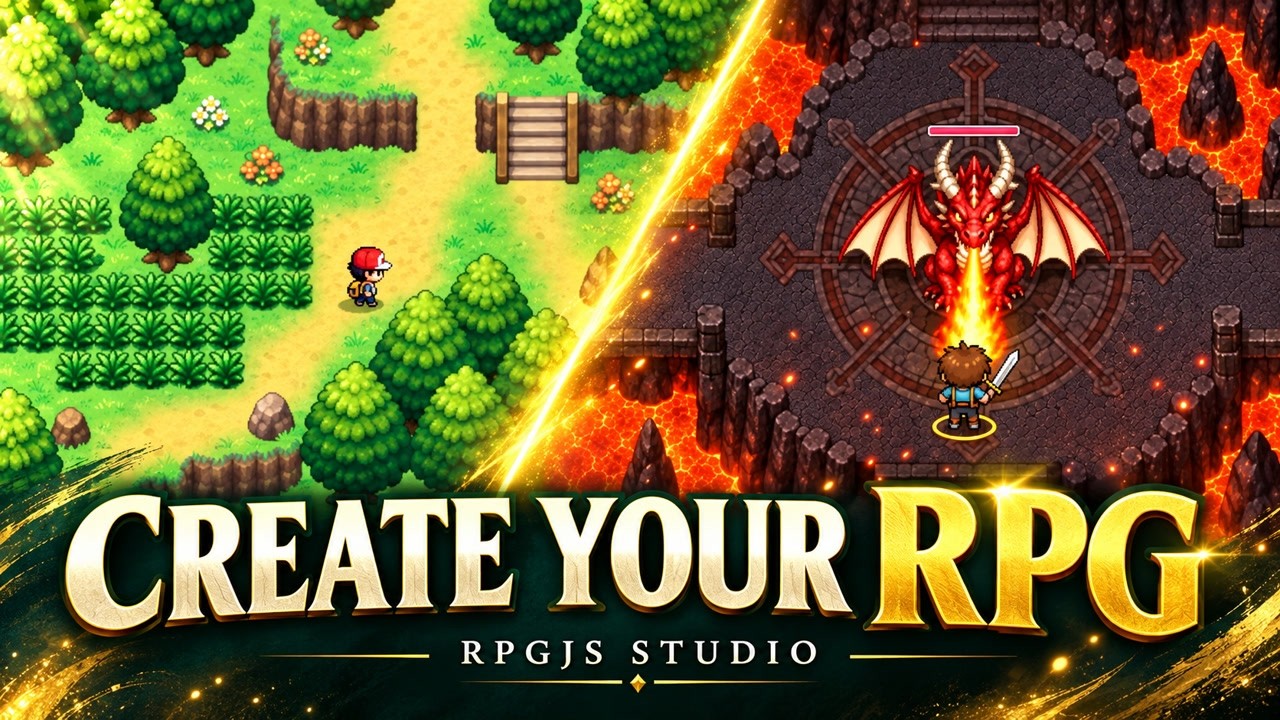
RPGJS is a TypeScript framework for 2D RPGs and MMORPGs in the browser. Maps, events, dialogs, inventory, skills, combat, save/load, GUI and multiplayer synchronization are already there: you write the game, not the engine.
GitHub · Quick start · Documentation · Discord
RPGJS Explained
Start here: a short tour of the idea behind the engine, and why the same code can power a single-player RPG and an online world.
Your First Game in 30 Seconds
npx degit rpgjs/starter#v5 my-rpg-game
cd my-rpg-game
npm install
npm run dev
Open the link: your hero is already walking around a map. Want to follow along step by step? The getting started tutorial goes from an empty folder to a multiplayer RPG in five steps.
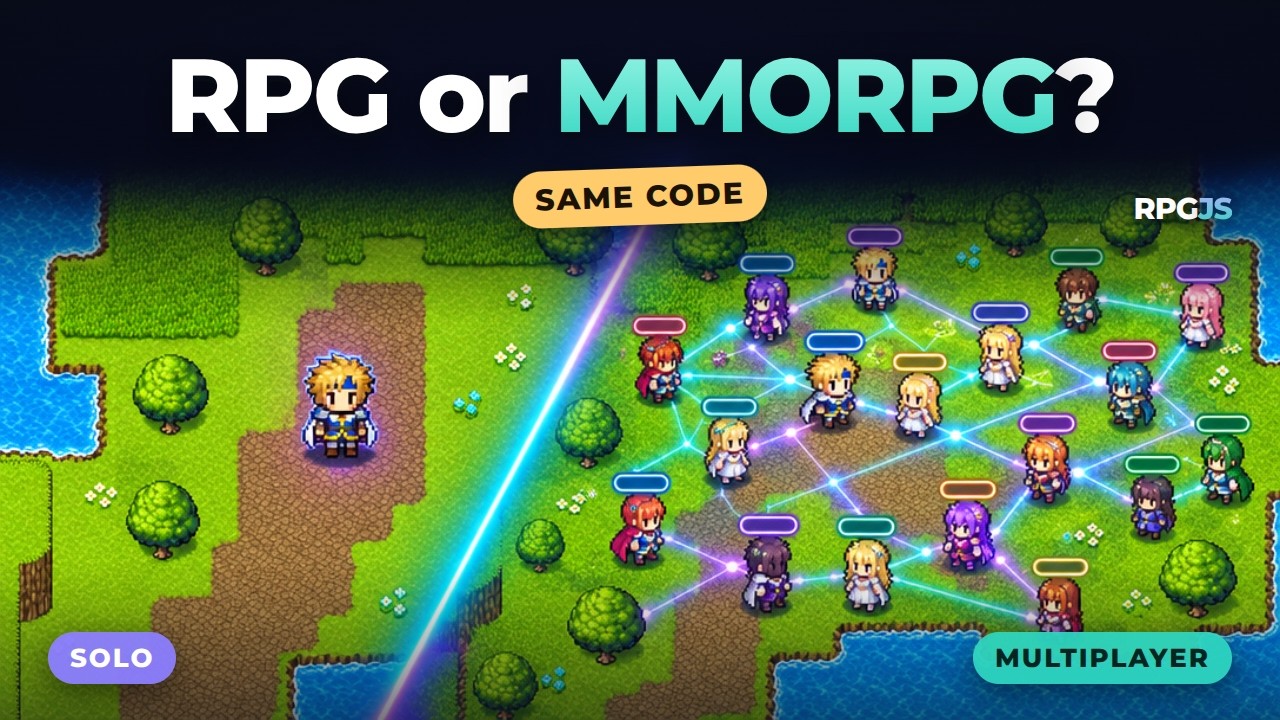
One Codebase, Two Games
The gameplay you write runs on a server-owned model from day one. Switching from a single-player RPG to an MMORPG is a runtime choice, not a rewrite.
Standalone RPG, where the server runs in the browser:
startGame({
  ...config,
  providers: [provideRpg(startServer)],
});MMORPG:
startGame({
  ...config,
  providers: [provideMmorpg({})],
});RPG_TYPE=mmorpg npm run devIn MMORPG mode the server stays authoritative, each map becomes a synchronized room, and the client predicts movement so the game still feels instant.
Gameplay Reads Like a Script
Events are plain TypeScript. A merchant that sells potions looks like this:
import { type EventDefinition, type RpgPlayer } from "@rpgjs/server";

export function Merchant(): EventDefinition {
  return {
    name: "Merchant",
    onInit() {
      this.setGraphic("merchant");
    },
    async onAction(player: RpgPlayer) {
      const choice = await player.showChoices("Need something for the road?", [
        { text: "A potion (20 gold)", value: "potion" },
        { text: "Just looking", value: "no" },
      ]);

      if (choice?.value === "potion" && player.gold >= 20) {
        player.gold -= 20;
        player.addItem("potion");
        await player.showText("Safe travels!");
      }
    },
  };
}
Want enemies that fight back? Give an event a battle AI:
new BattleAi(this, { enemyType: EnemyType.Aggressive });What Landed Since the Beta
The beta laid the foundations. The road to 5.0.0 filled in what a real game needs:
- Production MMORPG hosting: room adapters for persistent Node servers and Cloudflare Durable Objects, the same game module running on both.
- Map streaming: maps are sent progressively in render and physics chunks, with spatial interest management so each player only receives what is around them.
- Live map updates: publish maps and events to a running server from an editor, without restarting it.
- Accounts: a pre-connection login and registration screen, with themeable visuals, music and optional password recovery.
- Official chat: an authoritative, replaceable chat module with default and pixel themes and moderation hooks.
- Character select and classes: a cinematic character selector, runtime actor switching that keeps progression, and class skill progression.
- Hotbar: a persistent hotbar for skills and items, with keyboard shortcuts, a radial gamepad selector and mobile support.
- Custom gameplay rooms: scenes that run independently of maps (mini-games, battle screens), with seamless player transfers.
- Audio: one
playSound()API with mixer channels, spatial sound, and coordinated map and battle music. - Terrain rendering: the same terrain renderer as the RPGJS Studio editors, including water and submerged elements.
What’s in the Box
| 🗺️ World | Maps, world maps, Tiled support, events, shared and per-player scenarios, weather, lighting, day/night |
| ⚔️ Gameplay | Items, skills, states, classes, real-time action battle, projectiles, hotbar, save/load |
| 🌐 Multiplayer | Authoritative server, map rooms, client prediction and reconciliation, live map updates, accounts, chat |
| 🖼️ Interface | Title screen, dialogs, menus, shop, HUD, character select, themes, mobile controls, gamepad, Vue overlays |
| 🌍 i18n | One translation catalog for server dialogs, client menus and modules |
| 🛠️ Tooling | TypeScript first, Vite, Vitest testing helpers, dependency injection, modules and plugins |
| ☁️ Deploy | Node or Cloudflare Workers, with no lock-in to a database or host |
Build It With Your AI Assistant
Teach your coding assistant how RPGJS v5 works:
npx skills add https://github.com/RSamaium/RPG-JS#v5The framework handles the hard parts (synchronization, prediction, persistence, deployment), so AI-assisted code builds on solid ground instead of reinventing them.
Coming From v4?
compatibilityV4Plugin() from @rpgjs/vite runs a v4 project layout on the v5 runtime. See the migration guide.
Code or Visual, Your Choice
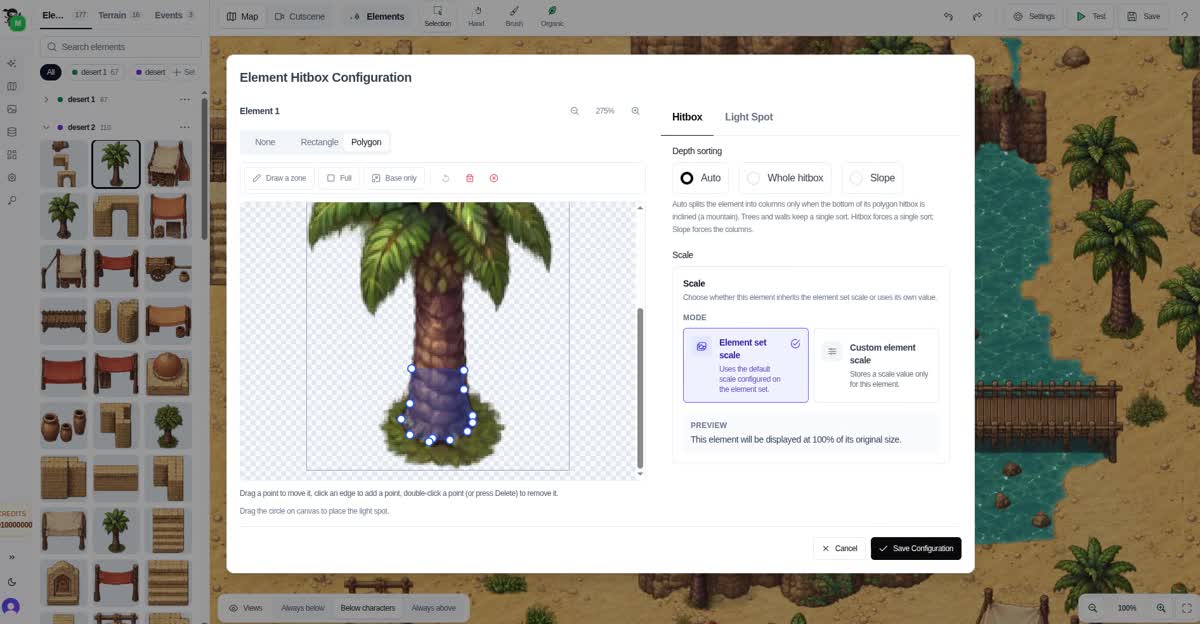
RPGJS v5 is the MIT-licensed, code-first foundation. RPGJS Studio is the visual workflow built on top of it: paint maps, build events and generate assets, then export RPGJS-compatible source whenever you want.
Join the Community
- Questions, ideas and showcases: Discord
- News and updates: @rpgjs_dev on X
- Bugs: GitHub Issues
RPGJS is MIT licensed and free for commercial use. If it helps you build your game, a ⭐ on GitHub helps others find it.